July 22, 2026 · Perry Hayer
Shadowboxing Workout at Home: 15 Minutes, No Equipment
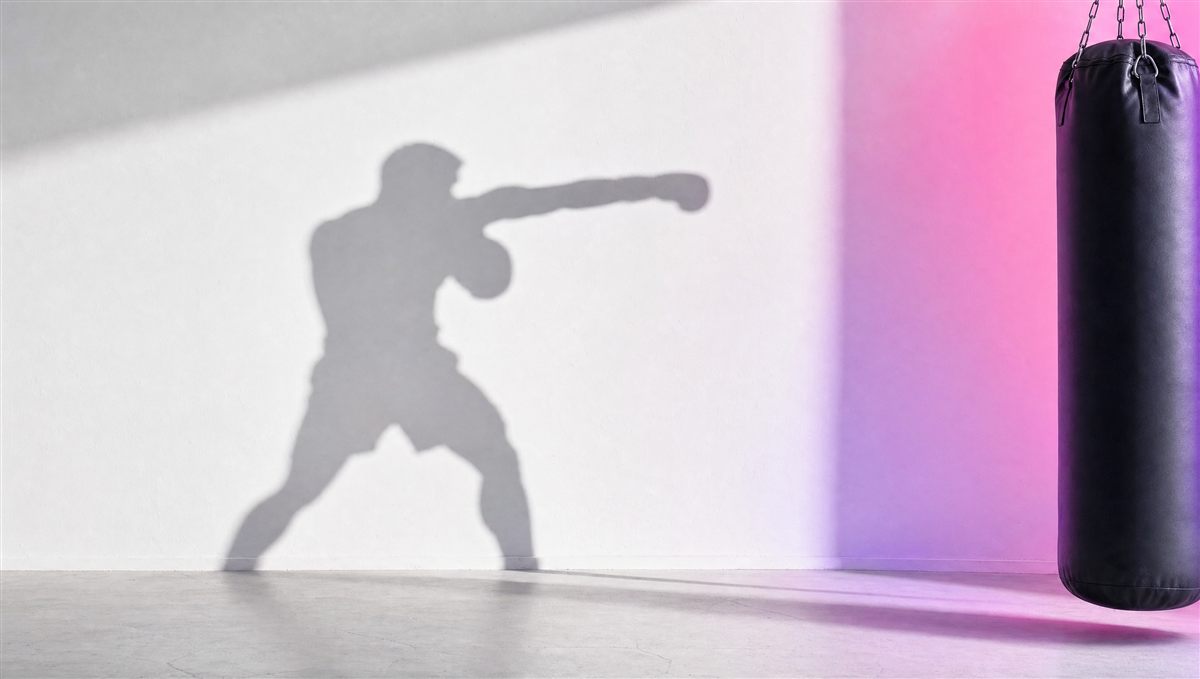
Shadowboxing is a complete workout that needs nothing but floor space: you throw punches at the air, move your feet, and build footwork, coordination, and conditioning inside the footprint of a living-room rug.
No bag. No gloves. No membership. If you can take two steps in any direction, you have a boxing gym. That’s not a gimmick — it’s how every fighter I’ve ever trained with starts every single session, and it’s the best zero-cost workout I can hand a beginner in Surrey or anywhere else.
What does shadowboxing actually train?
Three things, and they happen to be the three things beginners need most.
Footwork. Boxing is a leg sport that people mistake for an arm sport. How you move — balanced, controlled, never crossing your feet — decides everything else you’ll ever do. Shadowboxing is footwork practice with punches attached.
Coordination. Your hands and feet learning to do different jobs at the same time, on rhythm, without your brain grinding to a halt. That skill bleeds into everything: lifting, rec-league sports, catching yourself when you trip on the stairs.
Your engine. Fifteen minutes of constant movement with bursts of output is interval training in disguise. Your shoulders burn, your lungs work, and there’s no machine to lean on.
Footwork and engine are the two pillars I hammer on in Train Like a Fighter. Shadowboxing is the one drill that trains both at once, for free.
Why does shadowboxing feel so awkward at first?
Because you’re asking your body to do something it has never done, with no bag to hide behind and no weight to move. Just you, maybe a reflection, and the creeping thought that you look ridiculous.
Here’s the truth: you do look awkward. Everyone does for the first two weeks. Fighters look fluid because they’ve logged thousands of rounds, not because they skipped the clumsy phase. Awkward is not a warning sign. Awkward is what coordination feels like while it’s being built.
And you’re in your living room. Nobody is watching. What this means for you: the only thing between you and looking competent is about ten sessions, and every one of them is private.
The 15-minute shadowboxing workout, round by round
Clear a space two steps wide in every direction. Set a round timer on your phone: 3-minute rounds, 45 seconds of rest. Five rounds. Fifteen minutes of work plus short breathers.
Round 1 — stance and steps. No punches. Feet shoulder-width, one foot half a step back, knees soft, hands up at your cheeks. Now move: forward, back, left, right. Rule one: the foot closest to the direction you’re going moves first. Rule two: your feet never cross. This round feels too easy. It isn’t. It’s the foundation everything else sits on.
Round 2 — add the jab. The straight punch off your lead hand. Step and jab. Jab moving forward, jab moving backward, jab circling left and right. The hand snaps straight back to your cheek every single time.
Round 3 — jab-cross. Add the back hand and turn your hip into it. Throw the one-two, then move. Never stand still admiring your work — punch, step, punch, step. That habit, built now, is the one that eventually makes you look like you know what you’re doing.
Round 4 — combinations plus a slip. After each jab-cross, bend your knees slightly and shift your head off the centre line — left, then right. It won’t be pretty. Doesn’t matter. You’re teaching your head that it isn’t a stationary target.
Round 5 — free round. Everything you’ve learned, at your own pace. Picture a target at your own height. Move, touch, slip, breathe. In the last 30 seconds, empty the tank — non-stop punches until the timer sounds.
What are the most common shadowboxing mistakes?
Three show up in almost every beginner, and all three are fixable tonight.
Punching at nothing. If you’re just flailing at the air, you’re doing cardio arm circles. Pick a spot — a mark on the wall, an imaginary chin at your own height — and aim every punch at it. Intent is what separates shadowboxing from waving.
Standing still. Beginners plant their feet, throw ten punches, then remember to move. Flip it: movement is the default, punches interrupt it. If your feet stop for more than two seconds, that’s your cue.
Full-speed everything. Speed hides sloppy mechanics. Throw at half speed until the movement is clean, then earn the speed back. Slow shadowboxing done honestly is harder than fast shadowboxing done carelessly — and it builds twice as much.
How do fighters actually use shadowboxing?
It’s not a beginner drill that fighters graduate out of. It’s the drill they never stop doing.
I shadowboxed in the warm-up of every fight camp for seven years — 13 amateur MMA bouts between 2011 and 2018, and every one of them started with rounds of punching air in a back room. In November 2017, at BFL 52 at the Hard Rock Casino in Vancouver, my fight lasted 37 seconds — a guillotine choke finish. What nobody saw was the half hour of shadowboxing before the walkout. Ten months later, in September 2018, I warmed up exactly the same way for my final bout and won the BFL amateur welterweight title. The whole run is on Tapology if you’re curious.
The point isn’t the fights. The point is that the highest-pressure moments of my athletic life were built on the same free drill you can do tonight beside your couch. Fighters trust it because it works. You can too.
How do I get better at shadowboxing week to week?
Don’t add more time. Add more quality.
Week one: rounds one to three only. Obsess over your feet. Slow is fine — slow and balanced beats fast and stumbling every time.
Week two: all five rounds. Add the slip in round four, even if it feels like a bad dance move.
Week three: find a mirror or prop your phone up and film one round. Watch it back. You’ll spot the dropped hands and crossed feet instantly — honest footage is the fastest coach you’ll ever hire, and it’s free.
Week four: add intent. Pick up the pace in the final 30 seconds of every round, not just the last one. By now the awkwardness is mostly gone, and the session starts feeling like the reason you got off the couch instead of a chore.
After a month, shadowboxing becomes your warm-up instead of your whole workout — and you’re ready for the next layer. My beginner’s guide to fighter conditioning in Surrey lays out exactly what that layer looks like.
Start tonight
You don’t need equipment, money, or one ounce of experience. You need fifteen minutes and enough humility to look a little silly in your own living room. Every fighter you’ve ever admired started exactly there.
If you want the structure handed to you day by day, grab my free 5-Day Kickstart — five days of short video workouts you can do at home. And when you’re ready to train in person in Surrey, book a session or email info@perryhayer.com. The first round is always the hardest to start. So start it.
Ready to train like a fighter?
Start with the free 5-Day Kickstart, or book your first session with Perry in Surrey.