July 22, 2026 · Perry Hayer
Boxing for Stress Relief: Why Hard Training Clears Your Head
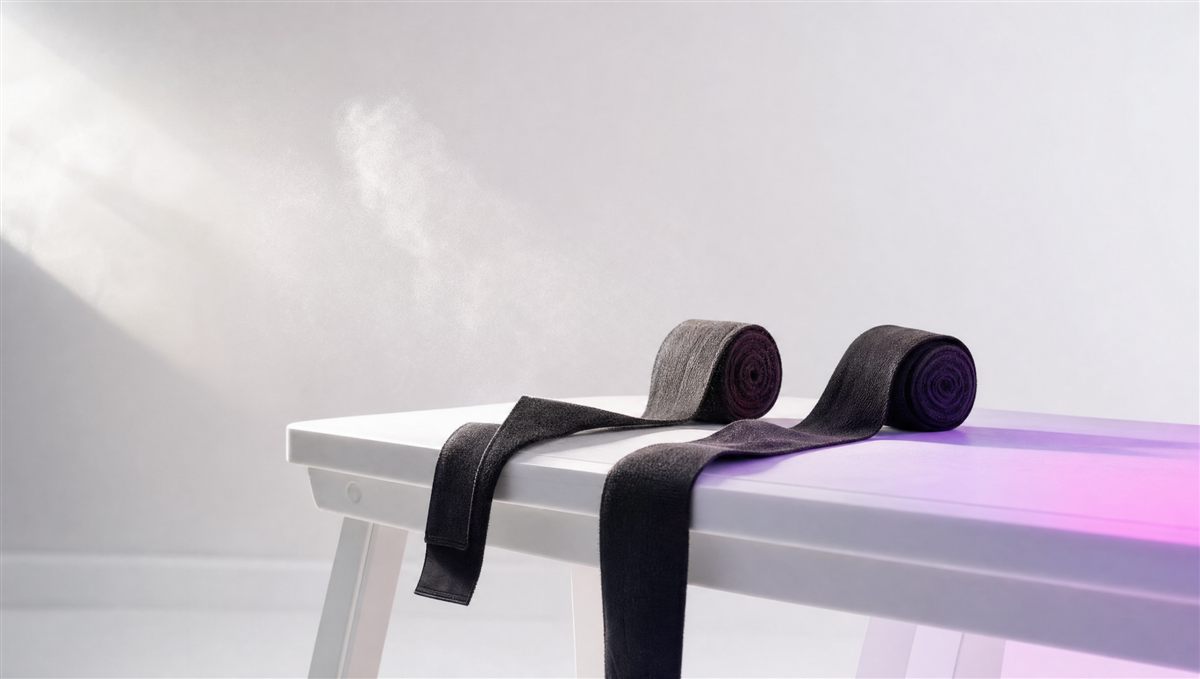
Hard training clears your head because it demands all of you at once — full body, full attention — and everyday stress cannot survive that combination. You cannot doom-scroll in the middle of a round. You cannot replay this morning’s argument while your hands are working a bag.
If your shoulders live up around your ears by Thursday, if your brain won’t shut off at night, if “relaxing” on the couch somehow leaves you more drained — this one’s for you. I’m not going to promise you inner peace. I’m going to show you a pressure valve I’ve watched work for hundreds of everyday people in Surrey.
Why is hitting a bag or pads such a good stress outlet?
Because it’s one of the few activities that takes everything you’ve got, all at once.
Most of what we call unwinding is passive. Couch, phone, screen. Your body stays parked and your mind keeps chewing the same worries — you’re not releasing stress, you’re just holding it while distracted. The bag is the opposite. Your legs drive, your lungs work, your hands move, and your attention locks onto timing and breath because it has to. When every channel is busy, the mental chatter loses its microphone.
There’s a physical honesty to it too. A stressed body feels braced — like it’s waiting for something to happen. Hard training gives it the something. Twenty minutes of honest output, and that braced feeling finally has somewhere to go.
Full attention plus full body. That combination is why a short round of bag work quiets a head that two hours of television couldn’t touch.
Why fighter training instead of just going for a run?
Running is good. I’m not here to talk you out of it. But if stress is the problem you’re solving, running has a leak: it leaves your mind free. Plenty of people finish a five-kilometre run having spent all five kilometres rehearsing the same argument they left the house to escape. The legs worked. The head never stopped.
Pads and bags don’t allow that. There’s a target, a rhythm, a combination to remember, a breath to time. The task fills your attention completely, and worry needs empty attention to live in. That’s the difference between exercise that tires you out and training that clears you out. Most of my clients came to me having already tried the first kind.
Can you train your mind like a muscle?
Yes. That’s not a poster slogan in my gym — it’s the entire method.
My mantra is mastery of mind, command over body, freedom of spirit, and the order is deliberate. The mind leads. The body follows. Mindset is everything, and mindset is trainable.
Here’s what mastery of mind looks like in practice. In every round, your attention will wander — to fatigue, to your day, to the clock. Every time you drag it back to your breathing and your next combination, that’s a rep. Not for your shoulders. For your attention. Do those reps three times a week and the same skill starts showing up outside the gym: pulling your head back to the task in front of you instead of the worry behind you.
Fighters aren’t calmer than everyone else by nature. They’re calmer because they’ve done ten thousand reps of returning to the present under pressure. You don’t need a cage to do those reps. You need a timer and a reason.
The discipline loop: keeping promises to yourself
A lot of everyday stress isn’t caused by what’s happening to you. It’s caused by the gap between what you say you’ll do and what you actually do. Every skipped workout, every “I’ll start Monday” — the gap widens, and your trust in your own word erodes with it.
Training closes the gap with a simple loop. Make a small promise: ten minutes, three rounds, tonight. Keep it. Feel the evidence land. Repeat tomorrow. Each kept promise is proof that your word to yourself means something, and stress has a much harder time gripping someone who trusts themselves.
That’s why I tell my clients that discipline isn’t punishment. Discipline is proof. And the promise has to be small enough to keep on your worst day — which is exactly why the protocol below is ten minutes, not sixty.
The injury that showed me what training is actually for
I competed for seven years — 13 amateur MMA bouts between 2011 and 2018, finishing in September 2018 when I won the BFL amateur welterweight title in my final bout. Fight camps taught me everything I know about pressure: how to work under it, breathe under it, think under it.
But it was an eye injury that showed me the bigger purpose. Sitting with the possibility that competing could be taken away, I realized the tools mattered more than the trophies — and that everyday people needed those tools more than any cage ever did. That’s the road that led to coaching, and to the 500-plus clients I’ve trained since. The fighting years built the method. Coaching is what it was for.
A simple 10-minute stress protocol for after work
Three rounds. Ten minutes. No equipment required — shadowbox if you don’t have a bag. If you want the full training system this slots into, it’s laid out in Train Like a Fighter, with a ground-up version in my beginner’s guide to fighter conditioning.
Round 1 — arrive (3 minutes). Easy movement. Light shadowboxing or soft shots on the bag. Breathe through your nose. This round has one job: the handover from work-brain to body-brain.
Round 2 — work (3 minutes). Honest effort. Combinations with a sharp exhale on every punch. Push the last 30 seconds. This is the round that burns the static off.
Round 3 — land (3 minutes). Bring it back down. Slow, deliberate, perfect form. Finish with one full minute standing still, hands down, breathing slow.
The rules matter more than the rounds. Phone in another room — the whole point is ten minutes your inbox can’t reach. Same time every day, ideally right after work, before the couch gets its hooks in. And never miss twice in a row. Miss once, you’re human. Miss twice, you’re building the other habit.
What this doesn’t replace
Training clears everyday stress — the deadline kind, the traffic kind, the too-many-tabs-open kind. If what you’re carrying feels heavier than that, talk to your doctor. No bag can do that job, and I’d be lying if I told you otherwise.
What training can do is give you a daily pressure valve, a trainable mind, and a growing stack of kept promises. For most of the stressed-out people who walk through my door, that turns out to be a lot.
Put it to work this week
Ten minutes. Three rounds. After work. That’s the whole promise — deliberately small enough to keep.
If you want it handed to you day by day, my free 5-Day Kickstart walks you through your first five sessions. And if you’re in Surrey and want someone holding the pads and holding you to your word, book a session or email info@perryhayer.com. Mastery of mind, command over body, freedom of spirit. It starts with round one.
Ready to train like a fighter?
Start with the free 5-Day Kickstart, or book your first session with Perry in Surrey.